
 Blog
Blog 


 Typical Sicilian products
 Citrus fruits
 Sicilian Oranges
 Mandarins and Clementines
 Citrus
 Fruits and Vegetables
 Dried Fruits
 Exotic Fruits
 Sicilian Fruits
 Organic Fruit Juice
 Herbs and Spices
 Mammarancia Selection
 Beer and Liquor
 Jam and Honey
 Sicilian Pistachio
 Sicilian Olive Oil
 Sweets and Creams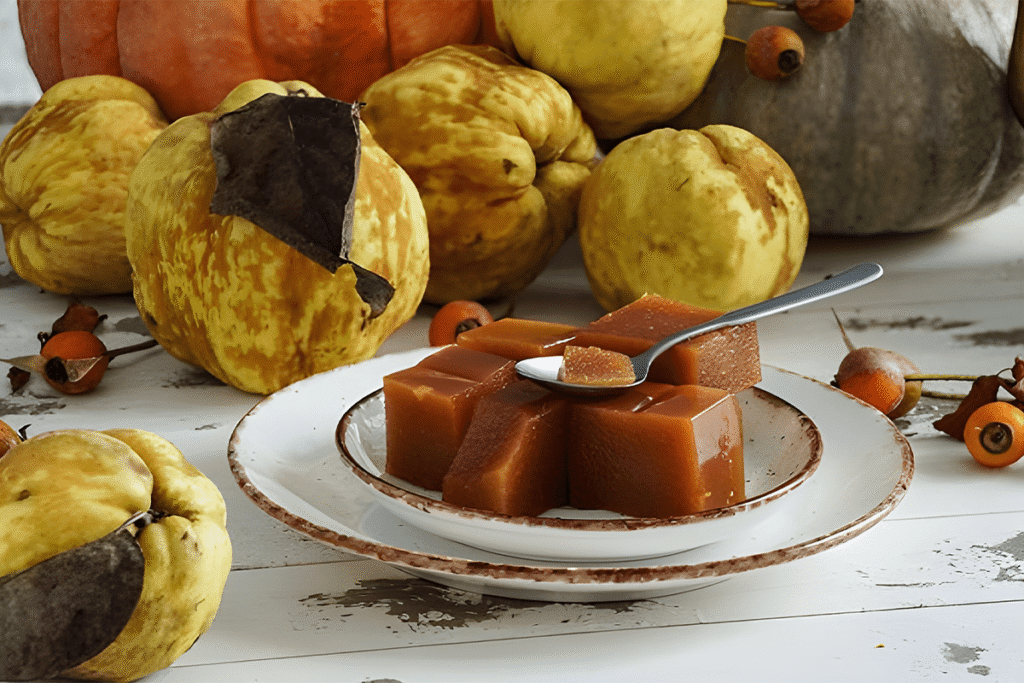
An ancient fruit with an intense aroma, perfect for jams, jellies and sweet-savory dishes: discover everything about quinces, how to choose them, use them and store them.
What quinces are (and why they’re not an “apple-pear hybrid”)
Although often mistaken for a cross between an apple and a pear, quince is the fruit of Cydonia oblonga, a small tree in the Rosaceae family (same family as apples and pears, different genus). Highly fragrant with grainy flesh, it’s rarely eaten raw because it’s astringent; in the kitchen it shines after cooking, when it turns soft, sweet and aromatic.
Origins and history: from the Greco-Roman world to today’s cuisine
The quince tree originates in the area stretching from Asia Minor eastwards; it was already known in Greco-Roman times (traces also in Pompeii). Its preserving vocation is ancient: quince paste, jellies, mostardas and jams are traditional in many European regions.
Seasonality, selection and storage
When to find it: autumn (peak between October and November).
How to choose: firm, fragrant fruits with golden-yellow skin.
Storage: in a cool, ventilated place; once cooked/processed, keep in sterilized jars stored in the dark (as for jams and jellies).
Properties and benefits of quinces
Quinces are low in calories, rich in fibre and especially pectin, a natural gelling agent that helps set jams and jellies. Pectin also supports bowel regularity and may help modulate cholesterol and blood sugar; there are also organic acids (like malic acid) and phenolic compounds with antioxidant action.
In short: fibre + pectin = allies for preserves and digestive well-being.
How to eat quinces (and why cooking is the key)
Raw, they’re tart and astringent; when cooked, they reveal their personality: soft, amber-coloured and fragrant. Classic uses: jams, jellies (quince paste) and mostardas; also great baked, in cakes and tarts, paired with cheeses (blue and aged) and with white meats (chicken, turkey).
Recipes and practical ideas
1) Quince jam (basic)
Simmer diced pulp with sugar and lemon over low heat until thick; jar hot into sterilized jars leaving ~1 cm headspace and seal to create a vacuum. Perfect on toast, in tarts or with cheese.
2) Quince paste (gelée / “fruit cheese”)
Cooked and sieved pulp, sugar and lemon: cook to a very dense consistency, pour into moulds and allow to dry. Serve in squares, alone or with cheese.
3) Savoury pairings & desserts
Savoury: quince sauce for white meats; cheeseboard with blue cheeses (e.g., Roquefort) and rustic bread.
Desserts: quince tart with nuts and spices (ginger/cinnamon), fritters, panna cotta with quince jelly.
Quick guide: clean and cook with ease
- Wash and dry the fruits.
- Peel (if needed) and remove core and seeds.
- Acidulate cooking water (lemon juice) to prevent browning.
- Cut into even wedges/cubes for uniform cooking.
- Cook over medium heat with water, sugar and aromatics (lemon, cinnamon).
- Transform into: preserve, jelly, mostarda, sauces.
Tip: quince’s natural pectin helps you achieve stable preserves with less sugar than other fruits.
Fast FAQs
Can you eat quinces raw? Yes, but they’re very astringent; they’re almost always eaten cooked or as preserves.
What’s the difference between quince jam and quince paste? Jam is spreadable; quince paste is a firm jelly cut into squares.
Which cheeses do they pair with? Perfect with blue and aged cheeses; also great with fresh goat cheese on bruschetta.
Where to buy quality quinces
Discover our Sicilian Quince Apples: picked at ripeness, intensely fragrant and ideal for preserves, quince paste and autumn recipes.
Conclusion
Quinces are a small treasure to rediscover: versatile, fragrant and naturally rich in pectin, they turn simple recipes into memorable dishes. Try them in preserves, quince paste or as a sauce for white meats and cheese.
Bring Sicilian autumn to your table: order your Sicilian Quince Apples and start experimenting!
READ ALSO
- Difference between jam and marmalade: what really changes? – https://www.mammarancia.com/difference-between-jam-and-marmalade-what-really-changes/
- Lemon marmalade: grandma’s recipe – https://www.mammarancia.com/lemon-marmalade-grandmas-recipe/
- Recipes with oranges: ideas for appetizers, first and main courses, desserts – https://www.mammarancia.com/recipes-with-oranges-ideas-for-appetizers-first-and-main-courses-desserts/