 Blog
Blog 


 Typical Sicilian products
 Citrus fruits
 Sicilian Oranges
 Mandarins and Clementines
 Citrus
 Fruits and Vegetables
 Dried Fruits
 Exotic Fruits
 Sicilian Fruits
 Fruit Juice
 Herbs and Spices
 Mammarancia Selection
 Beer and Liquor
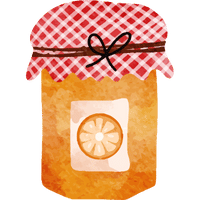 Jam and Honey
 Sicilian Pistachio
 Sicilian Olive Oil
 Sweets and Creams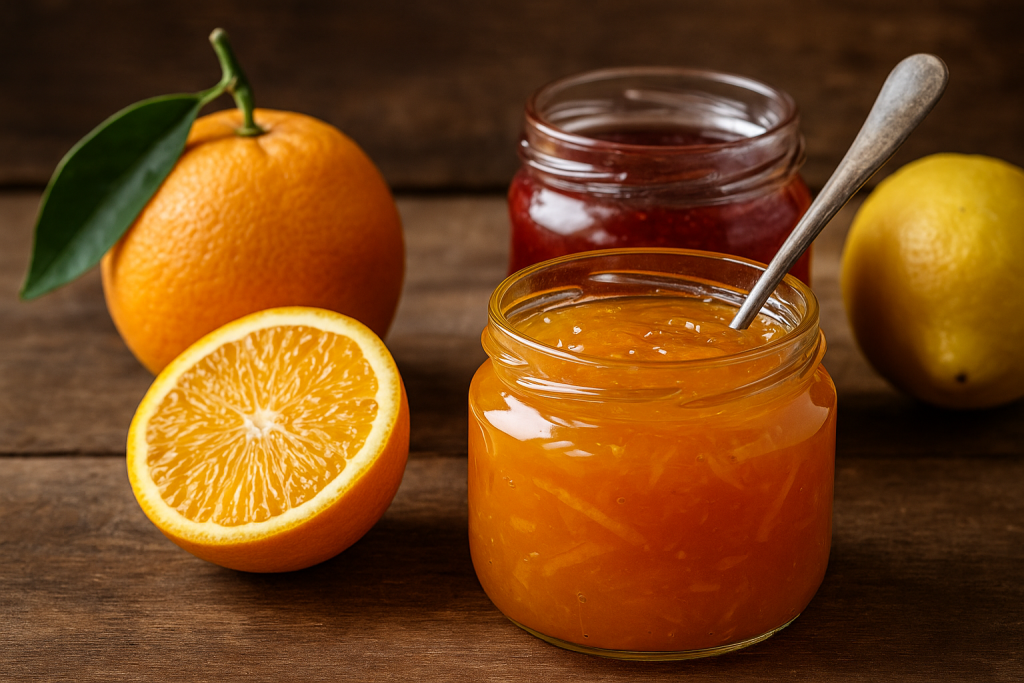
Two sweet preparations often confused
“Jam” and “jam” are two words we often use as synonyms–but are they really? If you’ve also wondered what the real difference between jam and marmalade is, you’ve come to the right place. In this article we explain what the law says, how to recognize them, and which one to choose based on taste or use in cooking.
👉 A must try: our authentic organic blood orange marmalade, made according to tradition!
What the law says
According to a European directive (No. 2001/113/EC), the jam is a preparation made exclusively from citrus fruits(oranges, lemons, tangerines, citrons, grapefruits). If it is made from any other type of fruit, it is called jam.
👉 So the difference between jam and marmalade is well defined: it depends solely on the type of fruit used.
Jam: characteristics
- Only from citrus
- Contains peel, pulp and juice
- More intense and slightly bitter flavor
- Often denser and more compact
Classic example? Our Organic Red Orange Marmalade, with an intense and natural fragrance.
Jam: characteristics
- It is made from all kinds of fruits (strawberries, cherries, apricots, apples, etc.).
- Sweeter taste, softer texture
- Can be plain (only pulp) or extra (high percentage of fruit)
How to use jam and marmalade
- Jam: perfect for tarts, rustic cookies, fillings with citrus flavors
- Jam: ideal for bread, fluffy cakes, yogurt and sweet-savory pairings
👉 In traditional Sicilian breakfast, the orange marmalade is a must on rusks!
Conclusion
The difference between jam and marmalade is not just a matter of language: it is rooted in legislation and methods of preparation. The next time you go shopping or bake a cake, you will know which one to choose based on the type of fruit and the result you want to achieve.
Discover our organic artisanal jams: only Sicilian citrus fruits, processed with love.
ALSO READ: